The production environment
How the abstractions stack — vendor-agnostic. The patterns Google's Borg pioneered showed up everywhere: Kubernetes, ECS, GKE, AKS. Knowing the lineage helps you read any modern cloud system.
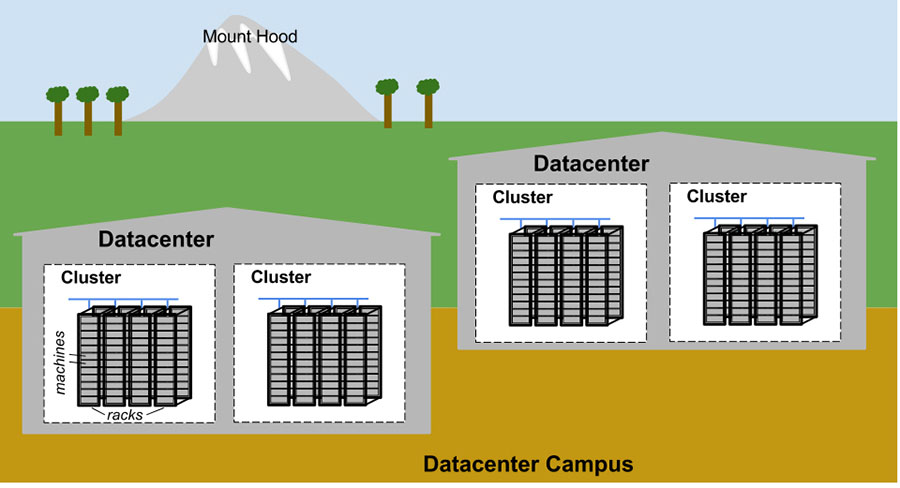
From the bottom up — same in any cloud, just different names at the top of the stack.
- MACHINEa physical box (or a VM)
- SERVERa piece of software implementing a service
- RACKtens of machines stand together
- ROWmultiple racks side by side
- CLUSTERone or more rows form a cluster
- DCa datacenter building houses multiple clusters
- CAMPUSmultiple datacenter buildings located close together
// at the cloud-provider level: availability zone ≈ datacenter · region ≈ campus. multi-region means multiple campuses.
Hardware
Cluster OS
Modern equivalents
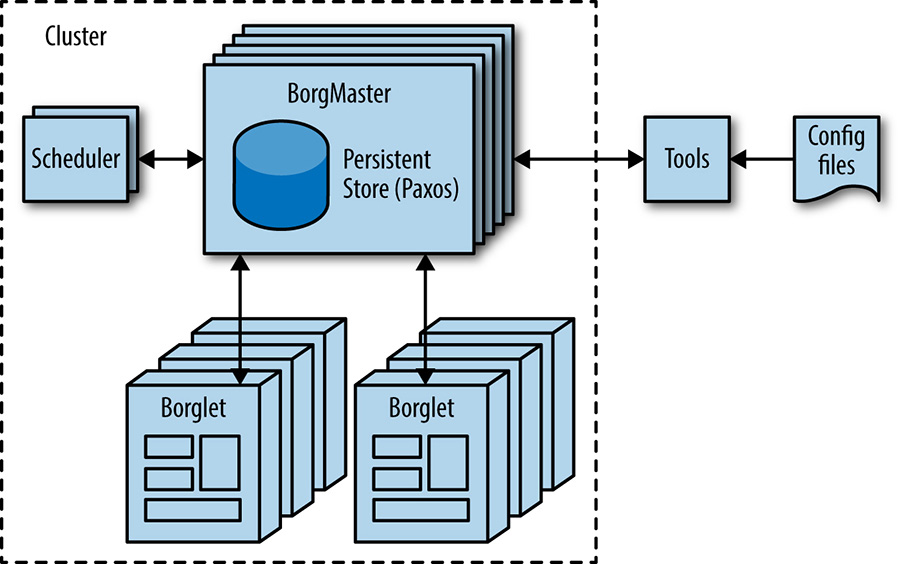
A scheduler decides where work runs. A master keeps the state of truth (replicated). Agents on each node execute the work. The persistent store uses a consensus algorithm — Paxos at Google, Raft (etcd) in Kubernetes.
// K8s parallel: kube-scheduler / kube-apiserver / kubelet / etcd. same components, different names.
Your team is comparing self-hosted Kubernetes vs managed EKS. A teammate says 'EKS is just a wrapper around the same K8s, the architecture is identical.' What's the most accurate response?
// pick one to verify